When Children Understand Connections: Why Links Matter More Than Isolated Facts

When Children Understand Connections: Why Links Matter More Than Isolated Facts
When children learn, it’s not just about memorizing facts—it’s about understanding how things fit together. A child who can explain why rain falls or how a story unfolds has achieved more than simple recall. They’ve built connections between ideas, experiences, and knowledge. And those connections are the foundation of deep learning.
From Memorization to Understanding
For decades, education often emphasized memorization—dates, formulas, vocabulary lists. But research in cognitive science shows that children learn best when they understand relationships. When they see how a new concept connects to something they already know, that knowledge becomes easier to remember and apply.
A child who understands why 2 + 2 = 4 can use that reasoning to solve new problems. A child who only memorizes the answer may struggle when the question changes. Understanding builds flexibility—and that’s the skill children need in a world where information is constantly evolving.
The Brain Thrives on Connections
The brain works like a network, linking new information to existing knowledge. The more connections that form, the stronger the understanding becomes. That’s why children learn better when they explore, ask questions, and draw parallels between ideas.
When a child learns about photosynthesis, for example, it helps to connect the concept to the plants in their backyard, to cooking, or to how humans depend on energy. Learning becomes concrete and meaningful—not just an abstract term in a textbook.
Finding Patterns in Everyday Life
Parents and teachers can nurture understanding by helping children notice patterns in daily life. It might be as simple as talking about why ice melts on a hot day or how a grocery list relates to planning dinner.
When children see that knowledge has real-world uses, they become more curious and motivated. They start asking “why” and “how” instead of just “what.” That shift shows they’re thinking in connections—and learning on a deeper level.
Learning Through Play and Conversation
Play is a natural way for children to build connections. When they construct with blocks, play store, or tell stories, they’re practicing cause and effect, cooperation, and planning. Conversations with adults can strengthen this learning: “What do you think will happen if we try this?” or “How does that relate to what we saw yesterday?”
By asking open-ended questions and allowing time for reflection, adults help children link thoughts and experiences. You don’t need to have all the answers—the key is to stay curious together.
Læs også:


Schools as Spaces for Connection
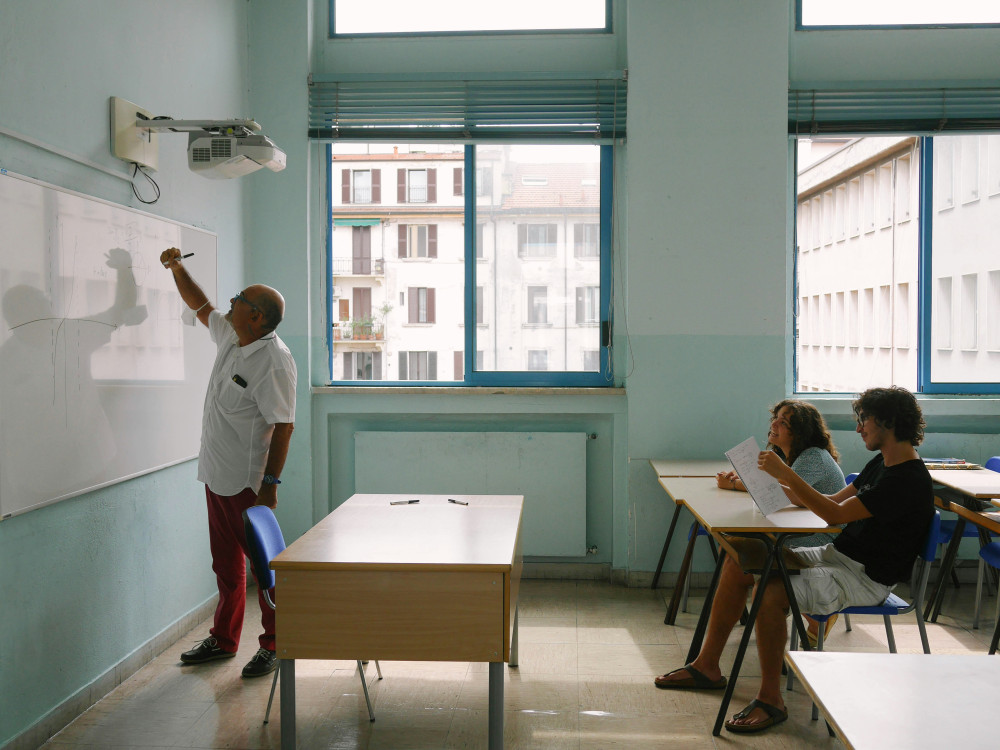
In schools, teachers can promote understanding by creating cross-disciplinary projects that show how subjects interrelate. A unit on climate change, for instance, can include science, geography, language arts, and social studies. When students see that knowledge doesn’t exist in isolated boxes but in a web of relationships, learning becomes more holistic.
It takes time and patience, but the payoff is significant: children who can think independently, ask meaningful questions, and use their knowledge creatively.
Connections Build Lifelong Learners
When children learn to see connections, they gain a tool they’ll use for life. They become better at understanding new topics, collaborating with others, and navigating a complex world. Understanding isn’t something you can memorize—it’s something you build, layer by layer, through experiences, conversations, and reflection.
Supporting children in making connections is one of the most important roles for parents and educators alike. In the end, it’s not the number of facts a child knows that matters most—but their ability to see how everything fits together.
Læs også: