Pottery for Beginners: Learn to Shape Clay on the Wheel


Pottery for Beginners: Learn to Shape Clay on the Wheel
Sitting at a pottery wheel with your hands deep in clay is both calming and challenging. Wheel throwing is one of the most traditional techniques in ceramics, and while it may look effortless, it takes practice, patience, and an understanding of the material. This article will guide you through the first steps so you can start shaping your own bowls, mugs, and vases.
What Is Wheel Throwing?
Wheel throwing is a method of shaping clay on a rotating wheel. By using your hands and steady pressure, you can pull the clay upward to create symmetrical forms. The technique has been used for thousands of years and remains popular today—both among professional potters and hobbyists looking for a creative, mindful activity.
Choosing the Right Clay
There are several types of clay, and your choice depends on what you want to make and what kind of kiln access you have.
- Stoneware clay – durable and ideal for functional pottery like mugs and bowls. It withstands high firing temperatures and becomes dense and strong.
- Earthenware clay – fires at lower temperatures and is easier for beginners to handle, but it’s not waterproof unless glazed.
- Porcelain clay – smooth and refined, but tricky to work with since it can collapse easily on the wheel.
For beginners, a soft but stable stoneware clay is a great starting point—it’s forgiving and easy to control.
Equipment You’ll Need
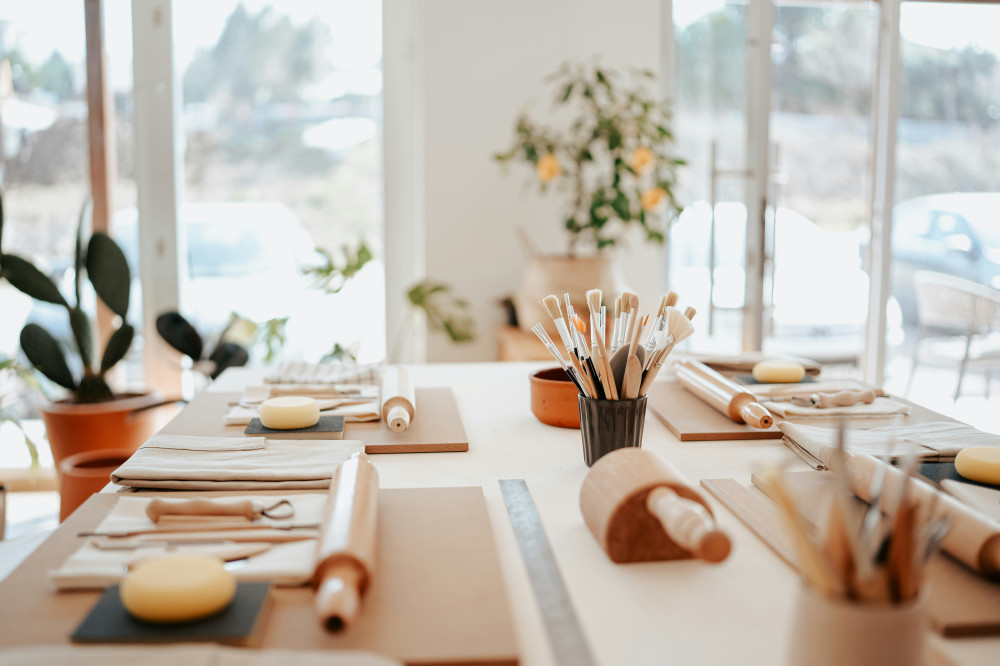
You don’t need a fully equipped studio to get started, but a few basic tools are essential:
- Pottery wheel – available in electric and manual versions. Electric wheels provide steady rotation and are easiest for beginners.
- Water bowl and sponge – to keep the clay moist while you work.
- Wire cutter – to remove your piece from the wheel.
- Wooden and metal tools – for shaping, smoothing, and trimming excess clay.
- Apron and towel – pottery is messy, but that’s part of the fun.
If you don’t have space or budget for your own setup, consider taking a class or renting time at a local pottery studio. Many community centers and art schools across the U.S. offer beginner-friendly workshops.
Step-by-Step: Getting Started
-
Prepare the clay Wedge the clay thoroughly to remove air bubbles. This makes it more uniform and reduces the risk of cracking during firing.
-
Center the clay Place a lump of clay in the middle of the wheel and press it down firmly while the wheel spins. Centering is key—your clay should spin smoothly without wobbling.
-
Open the center Press your thumbs into the middle while keeping your hands steady. This creates the base of your bowl or cup.
-
Pull up the walls Use both hands to gently squeeze and lift the clay upward in a smooth motion. It takes practice to keep the walls even all around.
-
Shape and smooth Once you have the form you want, use a sponge or rib tool to smooth the surface. Trim away excess clay at the base with a wire cutter.
-
Dry and trim Let your piece dry until it’s “leather-hard”—firm but still slightly damp. Then you can trim the bottom and add details like a foot ring or decorative touches.
Patience and Practice
Your first attempts probably won’t be perfect. The clay might wobble, collapse, or crack—but that’s part of the learning process. Wheel throwing is about developing a feel for the material and the motion. The more you practice, the better you’ll understand when the clay is ready for each step.
A good tip: keep your early pieces, even the imperfect ones. They’ll remind you how far you’ve come.
Glazing and Firing
Once your piece is completely dry, it’s time to fire it in a kiln. The first firing, called a bisque firing, hardens the clay but leaves it porous. After that, you can apply glaze—a liquid coating that melts into a smooth, glassy surface during the glaze firing. Stoneware typically fires between 2200–2300°F.
If you don’t have access to a kiln, many pottery studios and community centers offer firing services for a small fee.
Læs også:

Finding Calm in the Process
Wheel throwing is more than a craft—it’s a way to slow down and focus. The rhythmic motion, the hum of the wheel, and the feel of clay between your fingers can be almost meditative. Many potters say time seems to disappear while they work.
So take your time, enjoy the process, and don’t let the pursuit of perfection overshadow the joy of creating something with your own hands.
Læs også: